
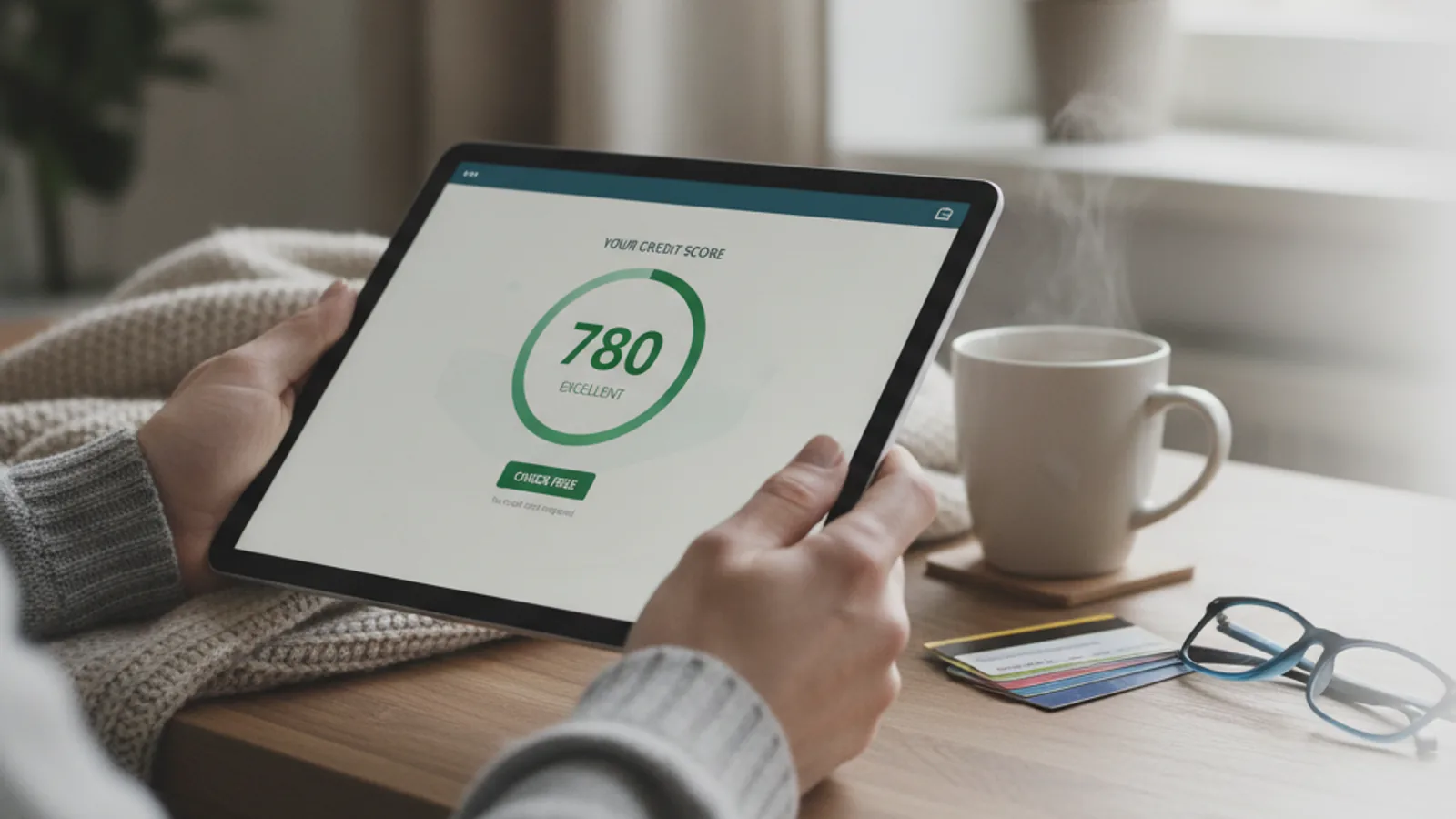
Free Credit Score Check
Checking your credit score is a vital step in managing your financial health, but you should never have to pay for it. This guide shows you how to get a completely free credit score check from safe and reputable sources. We'll walk you through where to go, what information you'll need, and how to avoid common traps like "free trial" offers that end up costing you money. Following these steps will give you the insight you need to understand your creditworthiness without spending a dime.
Fast Answer
- Best Source for Reports: Visit AnnualCreditReport.com, the only site federally authorized to provide free weekly credit reports.
- Best Source for Scores: Use the free credit monitoring tool offered by your own bank or credit card company.
- Key Rule: Never provide credit card information for a "free" credit score check.
Before You Start
Gathering a few key pieces of information beforehand will make the process smooth and quick. You are essentially proving your identity online, so the services need to confirm you are who you say you are. Make sure you are on a secure, private internet connection (like your home Wi-Fi) and not public Wi-Fi before entering any sensitive data.
- Personal Information: Your full legal name, current and previous addresses, and date of birth.
- Social Security Number (SSN): You will need to provide your full SSN to access your credit files.
- Answers to Security Questions: Be prepared to answer multiple-choice questions about your financial history. These might include past loan amounts, former mortgage lenders, or previous street names.
Step-by-Step Instructions
Understand the Difference: Score vs. Report
Before you begin, it's crucial to know the difference between a credit score and a credit report. They are related but serve different purposes.
A credit report is a detailed history of your credit activity. It lists your accounts (credit cards, loans), payment history, credit limits, and public records like bankruptcies. You are entitled by federal law to a free copy of your credit report from each of the three major bureaus (Equifax, Experian, and TransUnion) every single week.
A credit score is a three-digit number, typically between 300 and 850, that summarizes the information in your credit report at a specific moment in time. Lenders use this score to quickly assess your credit risk. Many services now offer free access to this score.
Start with Your Free Credit Reports
The best place to begin is by getting your full credit reports. This allows you to see the data that your score is based on and check for any errors. The only website authorized by federal law to provide these free reports is AnnualCreditReport.com.
Navigate to the site and click the button to request your reports. You will be guided through a process to verify your identity. You can request reports from all three bureaus—Equifax, Experian, and TransUnion—at the same time. Since the law was updated, you can do this every week, which is great for keeping a close eye on your credit health, especially if you suspect fraud.
Choose a Truly Free Source for Your Credit Score
Once you've reviewed your reports, it's time to get your score. Unlike reports, there isn't one single government-mandated site for free scores. However, there are many trustworthy options available. The safest and most convenient source is often a company you already do business with.
Check with your bank or credit card issuer first. Most major banks (like Chase, Bank of America, Citi) and credit card companies (like Capital One, Discover, American Express) provide free credit scores to their customers as a standard feature. Look for a "Credit Score" or "Financial Wellness" tool in your online account dashboard or mobile app. This is an excellent, no-strings-attached way to get your score.
Alternatively, you can use reputable third-party financial apps like Credit Karma or Credit Sesame. These services are free because they make money by recommending financial products to you. They are legitimate, but be prepared to see offers for credit cards and loans.
Provide Your Information Securely
Whether you're on AnnualCreditReport.com or your bank's website, you'll need to provide personal information to confirm your identity. This includes your name, address, date of birth, and Social Security Number. Before entering anything, double-check that the website URL begins with "https://" and shows a padlock icon in the address bar. This indicates the connection is secure and encrypted.
Be precise with the information you enter. A typo in your name or a previous address can cause the system to fail to find your file. Have your details ready to ensure a smooth process.
Answer the Identity Verification Questions
After submitting your personal data, you'll face a series of multiple-choice questions to prove you're you. These questions are pulled from your credit report and public records. They are designed so that only you would know the correct answers.
Examples include:
- "Which of the following companies holds your auto loan?"
- "Your mortgage payment in January was approximately..."
- "Which of the following street names have you previously been associated with?"
Take your time and answer carefully. If you don't recognize any of the options for a question, there's usually a "None of the above" choice. Choosing this is better than guessing incorrectly. If you fail the verification process, you may be instructed to request your report by mail instead.
Review Your Score and Report Details
Success! You now have access to your credit score and reports. Don't just glance at the three-digit number. Take a few minutes to understand what it means. Most services will show you the key factors influencing your score, such as your payment history, credit utilization, and length of credit history.
Most importantly, scan your credit reports for errors. Look for accounts you don't recognize, incorrect late payment notations, or personal information that is outdated or wrong. Finding and correcting these errors is one of the fastest ways to improve your credit score. If you find an error, each credit bureau has a clear online dispute process you can start right from their website.
Common Problems When You Free Credit Score Check
Sometimes the process doesn't go as planned. Here are a few common hurdles and how to clear them.
Problem: The system can't verify my identity online.
This can be frustrating. It often happens to people with a "thin" credit file (not much credit history) or those who have recently moved. It can also occur if there's a security freeze on your credit report. If you can't pass the online verification, don't give up. AnnualCreditReport.com provides options to request your report via phone or by mailing in a form. It's slower, but it works.
Problem: A "free" site is asking for my credit card number.
This is the most common trap. You've landed on a site offering a free trial for a paid credit monitoring service. They give you a score for free for 7 or 30 days, but if you forget to cancel, you'll be charged a monthly fee. A truly free service does not require payment information. If you're asked for a credit card, simply leave the site and use one of the options mentioned in Step 3, like your bank or a service like Credit Karma.
Problem: I found an error on my credit report.
This is more common than you might think. If you find an account that isn't yours or a payment that's incorrectly marked as late, you have the right to dispute it. Go directly to the website of the credit bureau that is reporting the error (Equifax, Experian, or TransUnion). Each has a clearly marked "Disputes" section where you can file a claim online for free. The bureau has about 30 days to investigate and correct any confirmed errors.
Advanced Tips for Free Credit Score Check
Once you've mastered the basics, use these tips to get more value out of your free credit checks.
- Check All Three Reports Simultaneously: While you can stagger them, it's often more effective to pull your reports from all three bureaus at the same time at least once a year. This gives you a complete picture of your credit file, as some lenders only report to one or two bureaus. It's the best way to spot inconsistencies or errors that only appear on one report.
- Understand Your Scoring Model: The two main credit scoring models are FICO and VantageScore. Most lenders use a version of the FICO score when making lending decisions. Many free services provide a VantageScore. While they are calculated slightly differently, both are based on the same data from your credit report and are highly correlated. Knowing which score you're looking at helps you understand its context.
- Sign Up for Free Credit Monitoring Alerts: Many free score providers, including banks and third-party apps, offer free credit monitoring. This service will send you an email or push notification if there are significant changes to your credit report, such as a new account being opened, a hard inquiry, or a change of address. This is an invaluable tool for catching identity theft early.
- Focus on Trends, Not Minor Dips: Your credit score can fluctuate by a few points each month based on your reported balances and other factors. Don't panic over a small dip of 5 or 10 points. Instead, focus on the long-term trend. As long as your score is generally moving up or staying stable in a high range, you're on the right track.
Quick Reference
| Situation | Use This | Why |
|---|---|---|
| I need to check for fraud or errors in my full credit history. | AnnualCreditReport.com | It's the only federally authorized source for free weekly credit reports from all three major bureaus. |
| I want to track my credit score month-to-month. | Your bank's or credit card's free score tool. | It's safe, convenient, and integrated with an account you already use, with no strings attached. |
| A website asks for my credit card for a "free score." | Close the browser tab immediately. | This is a sign of a "free trial" for a paid service that will charge you if you don't cancel. |
| My score is different on two different apps. | Note the scoring model (FICO vs. VantageScore). | Different models and data sources cause minor variations. Focus on the overall health and factors listed. |
Free Credit Score Check FAQ
Will checking my own credit score hurt it?
No. When you check your own score or report, it's considered a "soft inquiry." Soft inquiries are only visible to you and have zero impact on your credit score. A "hard inquiry," which can temporarily lower your score by a few points, only happens when a lender checks your credit after you apply for a new loan or credit card.
How often should I check my credit score?
Checking your score once a month is a good habit. It keeps you informed without being obsessive. For your full credit reports, it's wise to review them thoroughly at least once a year or anytime you're planning a major financial move like buying a car or a home.
Why are my credit scores different from various sources?
There are three main reasons for this. First, not all creditors report to all three credit bureaus. Second, the information might be pulled on different days of the month. Third, sources may use different scoring models (e.g., VantageScore 3.0 vs. FICO Score 8). The key is that they should all be in a similar range and tell a similar story about your credit health.
What is considered a good credit score?
While each lender has its own standards, credit scores generally fall into these ranges using the 300-850 scale:
- 800 - 850: Exceptional
- 740 - 799: Very Good
- 670 - 739: Good
- 580 - 669: Fair
- 300 - 579: Poor
Final Checklist for Free Credit Score Check
Before you go, run through this final checklist to ensure you're getting your score safely and effectively. This simple routine will protect your information and help you make the most of the data you receive.
- Use a secure connection: Always check your credit on a private, password-protected Wi-Fi network.
- Go to the right source for reports: Bookmark AnnualCreditReport.com for your free, official credit reports.
- Use a trusted source for your score: Start with the free tool from your existing bank or credit card company.
- Never enter payment info: If a "free" service asks for a credit card, it isn't truly free. Back away.
- Review for errors: Actively scan your reports for unfamiliar accounts or incorrect information.
- Dispute mistakes promptly: If you find an error, file a dispute online directly with the credit bureau.
- Set up monitoring alerts: Turn on notifications to be alerted to significant changes on your report.