
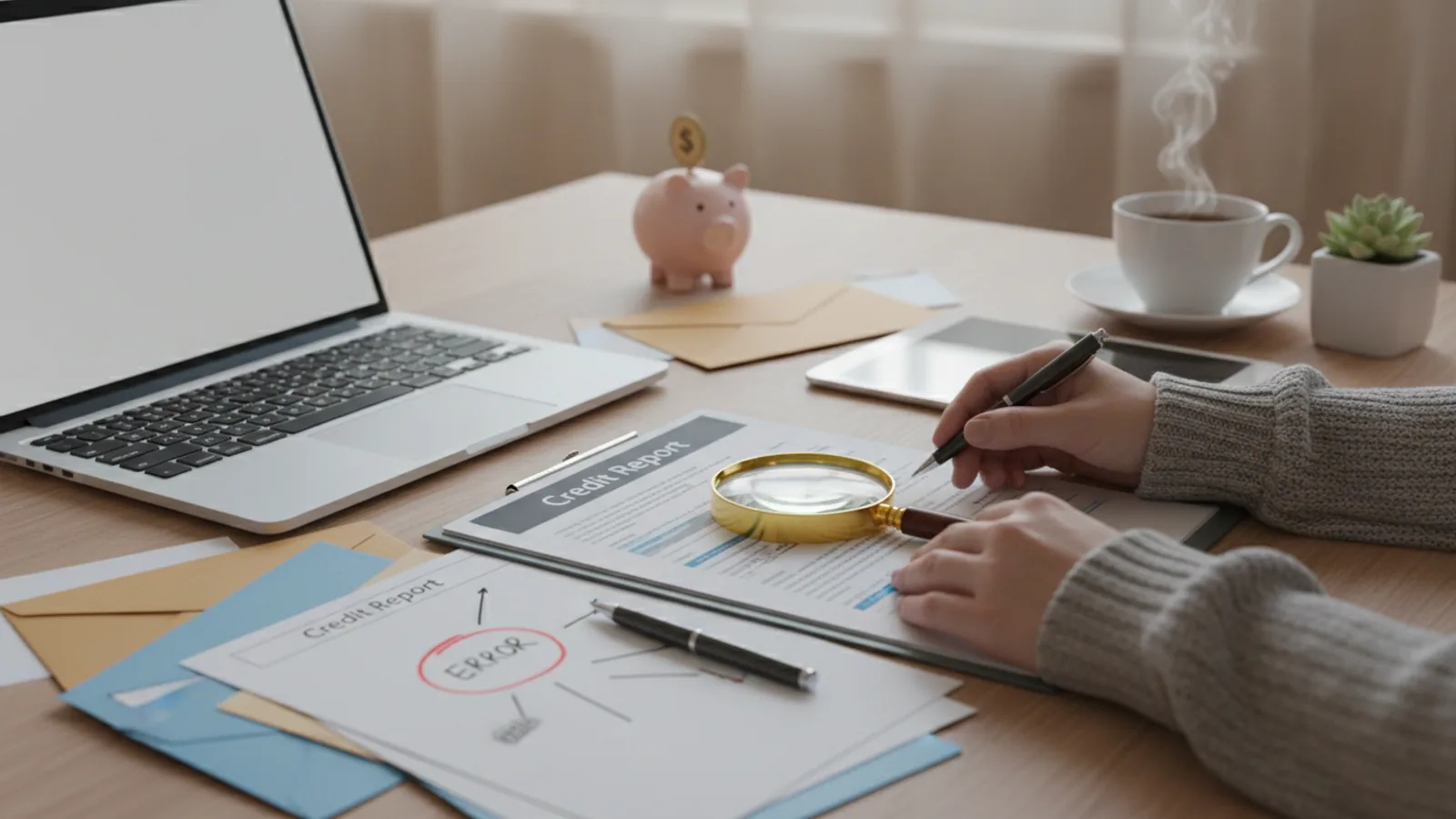
How To Dispute Credit Report Errors
Finding an error on your credit report can be alarming, but fixing it is a right you have by law. Mistakes on your report—like an account that isn't yours or an incorrect late payment—can lower your credit score, leading to higher interest rates on loans and credit cards, or even getting denied for new credit. This guide walks you through the exact, free process for how to dispute credit report errors with the credit bureaus and the companies that report your information, ensuring your financial record is accurate and fair.
Fast Answer
- Get your reports: Visit AnnualCreditReport.com to get free copies of your reports from Equifax, Experian, and TransUnion.
- Identify errors: Carefully review each report for mistakes in personal information, account status, balances, or payment history.
- File a dispute: Contact each credit bureau that shows the error (online or by mail) and provide evidence to support your claim.
- Your legal right: The Fair Credit Reporting Act (FCRA) requires bureaus to investigate and correct inaccurate information.
Before You Start
Disputing a credit report error is a formal process, and being prepared is the key to success. You are essentially building a small case to prove the information on your report is wrong. Gathering everything you need before you contact the credit bureaus will make the process smoother and increase your chances of getting the error removed quickly. You need to be organized and methodical.
What You Need
- Your Free Credit Reports: You'll need the most recent copies of your reports from all three major bureaus: Equifax, Experian, and TransUnion.
- Personal Identification: Have your full name, current and past addresses, Social Security number, and date of birth ready.
- A List of Errors: For each report, make a clear list of every item you believe is inaccurate, including the creditor's name and the account number.
- Supporting Documents: This is your evidence. Examples include copies of paid bills, canceled checks, bank statements, letters from creditors confirming an account is closed or paid off, or a police report if you are a victim of identity theft.
- Dispute Method Tools: If disputing online, you'll need a secure internet connection and a way to scan or upload documents. If disputing by mail, you'll need a printer, envelopes, and stamps. We recommend using certified mail.
Safety, Timing, or Context Checks
Step-by-Step Instructions
Follow these steps carefully to formally challenge any inaccuracies on your credit reports. Remember, if an error appears on reports from more than one bureau, you must repeat the dispute process with each one individually.
Get Your Free Credit Reports
You can't fix an error you don't know about. The first and most important step is to get your official credit reports. Federal law entitles you to a free copy of your report from each of the three major credit reporting agencies—Equifax, Experian, and TransUnion—every single week.
The only government-authorized source for these free reports is AnnualCreditReport.com. Avoid other sites that may try to sell you a credit score or sign you up for a paid service. Once you access your reports, download them as PDFs and save them so you have a permanent copy to reference.
Carefully Review Each Report for Errors
Go through each report line by line. Credit reports can be long and dense, so take your time. Use a highlighter or a notepad to mark anything that seems incorrect. Errors can fall into several categories:
- Personal Information: Look for misspelled names, wrong addresses, an incorrect Social Security number, or a wrong date of birth.
- Account Status: Check for accounts listed as open that you closed, incorrect credit limits, or accounts you don't recognize at all (a major sign of fraud).
- Incorrect Balances or Payments: Ensure your balances are correct and that you aren't marked as "late" for a payment you made on time. A single incorrect late payment can significantly damage your score.
- Duplicate Accounts: Sometimes the same debt (like a student loan or mortgage) can be accidentally listed twice.
- Outdated Negative Information: Most negative items, like late payments or collections, must be removed after seven years. A Chapter 7 bankruptcy stays for ten years. Check the dates and dispute anything that's too old.
Gather Your Supporting Documents
Your word alone is usually not enough to get an error corrected. The credit bureaus rely on information from "furnishers"—the banks, lenders, and collection agencies that report to them. To overturn their information, you need to provide proof.
Collect clear, readable copies of any documents that support your claim. For example, if a report says you missed a payment, provide a copy of your bank statement or a canceled check showing you paid on time. If an account is listed with the wrong balance, provide a copy of your most recent statement from the lender showing the correct balance. If you're a victim of identity theft, a copy of your police report or an FTC Identity Theft Report is essential.
Submit Your Dispute to the Credit Bureau
You have two primary ways to file a dispute: online or by mail. Each has its pros and cons.
Online Disputing: This is the fastest method. Each of the three bureaus has a dispute portal on its website. You'll be guided through a form where you can select the item in question, state the reason for the dispute, and upload copies of your supporting documents. It's convenient and provides an instant record that your dispute was received.
Disputing by Mail: This method is often recommended for more complex cases, such as those involving identity theft, because it creates a stronger paper trail. You'll need to write a formal dispute letter. In your letter, you must clearly state:
- Your full name, address, and contact information.
- The account number and creditor for each item you are disputing.
- A simple, factual explanation of why the information is wrong (e.g., "This account does not belong to me," or "I paid this bill on time on January 15, 2024, and have attached proof of payment.").
- A clear request for the item to be corrected or removed.
- A list of the documents you have enclosed as proof.
Send this letter, along with copies of your proof and a copy of your credit report with the errors circled, via certified mail with a return receipt requested. This costs a few extra dollars at the post office but gives you legal proof of when the bureau received your letter, which starts the 30-day investigation clock.
Dispute the Error with the Information Furnisher
This is a powerful step that many people skip. In addition to disputing with the credit bureau, you should also send a similar dispute letter and evidence directly to the company that reported the information (the "furnisher"). This could be your credit card company, your auto lender, or a collection agency.
By law, once the furnisher receives your dispute, they must conduct their own internal investigation. This puts pressure on them from two angles: from you directly and from the credit bureau, which will contact them as part of its own investigation. If the furnisher agrees the information is wrong, they are required to notify all the credit bureaus to update your file.
Wait for the Investigation and Review the Results
Under the Fair Credit Reporting Act (FCRA), credit bureaus generally have 30 days to investigate your dispute (it can be extended to 45 days in some circumstances). During this time, they will review your evidence and forward it to the information furnisher, who must then check its records.
Once the investigation is complete, the credit bureau must send you the results in writing. If they find in your favor, the letter will state that the information has been corrected or deleted. You will also receive a free copy of your updated credit report. If they decide the information was accurate, the letter will explain why, and the item will remain on your report.
If the dispute was successful, you can ask the credit bureau to send a notice of the correction to anyone who received your report in the last six months (or two years for employment purposes). This can be helpful if you were recently denied a loan because of the error.
What to Do If Your Dispute Is Rejected
Sometimes, the bureau will side with the furnisher and your dispute will be denied. This can be frustrating, but you still have options. First, the bureau must tell you the name and contact information of the furnisher that verified the debt. You can try contacting them again directly.
You also have the right to add a 100-word "statement of dispute" to your credit file. This statement will be included with your credit report anytime it's pulled by a potential lender. It allows you to explain your side of the story in your own words (e.g., "I disagree with this late payment notice. The creditor failed to mail a bill to my new address after I provided it to them.").
If you are confident the information is wrong and the bureau is not helping, your next step is to file a complaint with the Consumer Financial Protection Bureau (CFPB) or your state's Attorney General.
Quick Reference
| Situation | Use this | Why |
|---|---|---|
| A simple typo, like a misspelled street name. | The bureau's online dispute portal. | It's the fastest and most efficient way to fix minor clerical errors. |
| A complex issue involving identity theft or fraud. | A detailed letter sent by certified mail. | This creates a formal paper trail that is crucial for legal and tracking purposes. |
| The bureau rejects your dispute but you are certain it's an error. | File a complaint with the CFPB. | The CFPB has oversight and can compel the bureau to respond and re-investigate. |
| You have proof from the lender that the debt was paid. | Dispute with both the bureau and the lender simultaneously. | Provides undeniable proof and puts pressure on both parties for a fast resolution. |
Common Problems When You Dispute Credit Report Errors
Even when you do everything right, you might run into a few snags. Here’s how to handle them.
- The error reappears after being removed ("reinsertion"). This is illegal unless the furnisher provides certification that the information is correct. If this happens, re-dispute immediately with the bureau and include a copy of the letter showing the previous removal. Also, file a complaint with the CFPB right away.
- The bureau calls your dispute "frivolous." This is a formal rejection, usually because you didn't provide enough personal identification for them to find your file or you didn't include enough specific information about the error. Double-check that your dispute includes your full name, SSN, address, and clearly identifies the account in question, then resubmit it.
- You don't hear back within the 30-45 day window. The bureaus are legally required to respond. If they don't, send a follow-up letter referencing your original dispute and the date it was received (this is where your certified mail receipt is invaluable). If you still get no response, file a complaint.
- The bureau says it "verified" the debt, but you know it's wrong. Sometimes, the "verification" process is just an automated check. You have the right under the FCRA to request the "method of verification." Send a letter asking specifically for this. This can force them to do a more thorough check instead of relying on a simple electronic confirmation from the furnisher.
Advanced Tips for Disputing Credit Report Errors
Ready to take your dispute to the next level? These strategies can help with stubborn cases.
- Keep a Meticulous Dispute Log: This is a pro move. Create a spreadsheet or a dedicated notebook. For each dispute, log the date you sent it, which bureau it went to, the specific error, and the date you expect a response. Record the date and time of any phone calls and the name of the person you spoke with. This organization is your best weapon if the issue drags on.
- Reference the Fair Credit Reporting Act (FCRA): When you write your letters, subtly showing that you know your rights can make a difference. Phrases like, "Pursuant to my rights under the Fair Credit Reporting Act, I request an investigation into the following item," can signal that you are a serious and informed consumer.
- File a CFPB Complaint Strategically: Don't use this as your first step, but don't hesitate to use it if you aren't getting results. The Consumer Financial Protection Bureau (CFPB) complaint portal is a powerful tool. When you file, the complaint is forwarded to the company, and they are required to respond. Most companies take CFPB complaints very seriously to maintain a good standing.
How To Dispute Credit Report Errors FAQ
How much does it cost to dispute a credit report error?
Will disputing an error hurt my credit score?
What's the difference between a credit freeze and a dispute?
Can I just call the credit bureau to fix an error?
How long until an old debt is removed from my report?
Final Checklist for Disputing Credit Report Errors
- Pulled your free credit reports from Equifax, Experian, and TransUnion.
- Identified every potential error and made a comprehensive list.
- Collected and made copies of all documents that prove your case.
- Submitted a separate dispute for each error to each bureau that listed it.
- Used the online portal for speed or certified mail for a paper trail.
- Sent a separate dispute letter to the company that furnished the information.
- Kept original documents and copies of everything you sent for your records.
- Set a calendar reminder for 45 days to follow up on the investigation's status.
- Prepared to escalate to the CFPB or add a statement of dispute if your claim is denied.